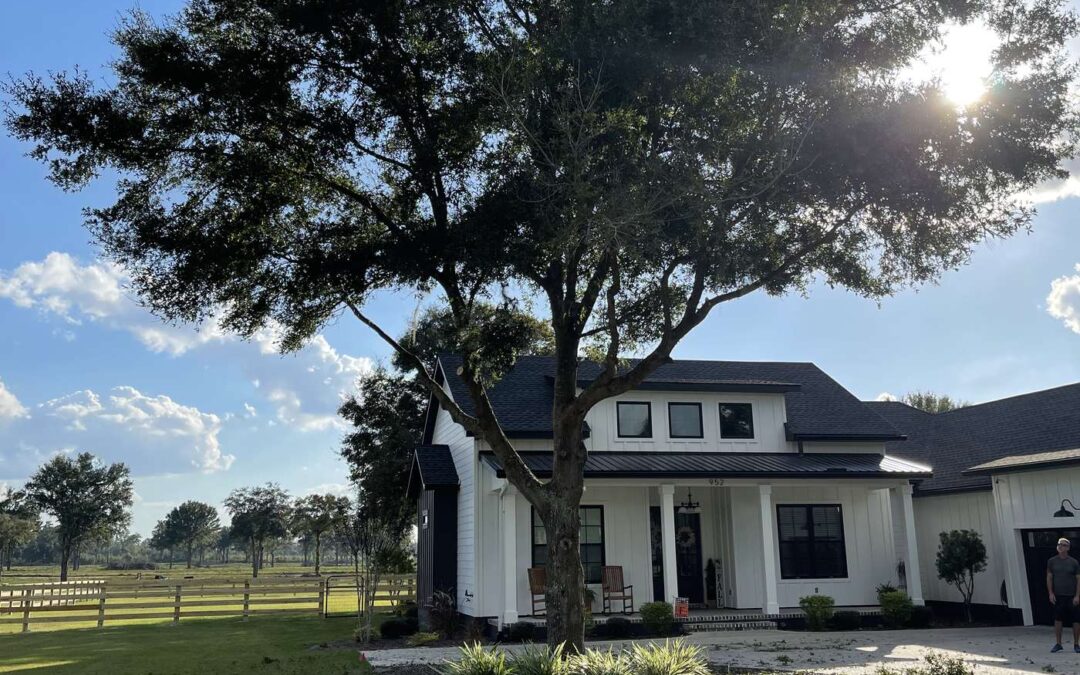
The tree risk assessment qualification is an ISA credential for arborists trained in a standard method of rating tree risk. A qualified assessor checks what the tree could hit, the site around it, and the crown, trunk, and roots. Then they rate how likely failure is, what it would damage, and how to reduce the risk.
What Is the Tree Risk Assessment Qualification?
It’s a specialized credential from the International Society of Arboriculture (ISA). ISA describes it as a voluntary qualification program:
- It has prerequisites. Candidates generally need an existing ISA credential, such as ISA Certified Arborist, or an equivalent background.
- It takes a course and two tests. A two-day course is followed by a written assessment and a performance-based one.
- It expires. Holders have to retrain and retest to keep it.
ISA calls it a qualification, not a certification, which is why you’ll see us say “Tree Risk Assessment Qualified.”
How Is It Different From an ISA Certified Arborist?
ISA Certified Arborist is the broad credential for general tree care. The tree risk assessment qualification is narrower. It covers one job: judging how likely a tree is to fail and what happens if it does.
Brazzi Smith, who owns Precision Tree Care & Removal, holds both. We announced his ISA Certified Arborist credential in 2025, and he does our tree risk assessments.
What Does the Assessor Look at Before the Tree?
The targets. A dead limb over an empty pasture is a different problem from one over a carport.
ISA’s Basic Tree Risk Assessment Form has the assessor record:
- What’s in range. People, the house, vehicles, a busy road. The target zone can reach up to 1.5 times the tree’s height when brittle wood could shatter.
- How often it’s there. Rare, occasional, frequent, or constant.
- What changed on the site. Grade changes, clearing, or new drainage, like a new driveway or a cleared lot next door.
- Wind exposure. A tree that just lost its neighbors now takes wind it never used to.
What Gets Checked on the Tree Itself?
Crown and branches. Dead branches, broken or hanging limbs, branches that reach too far out, and weak attachments where a limb joins the trunk.
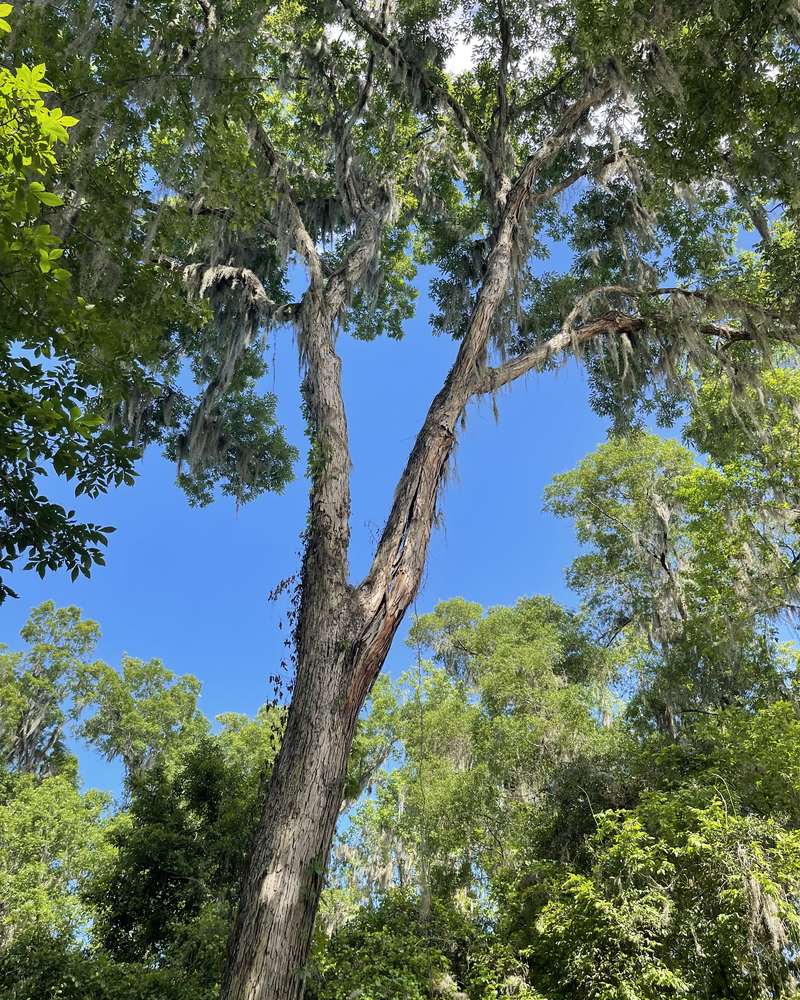
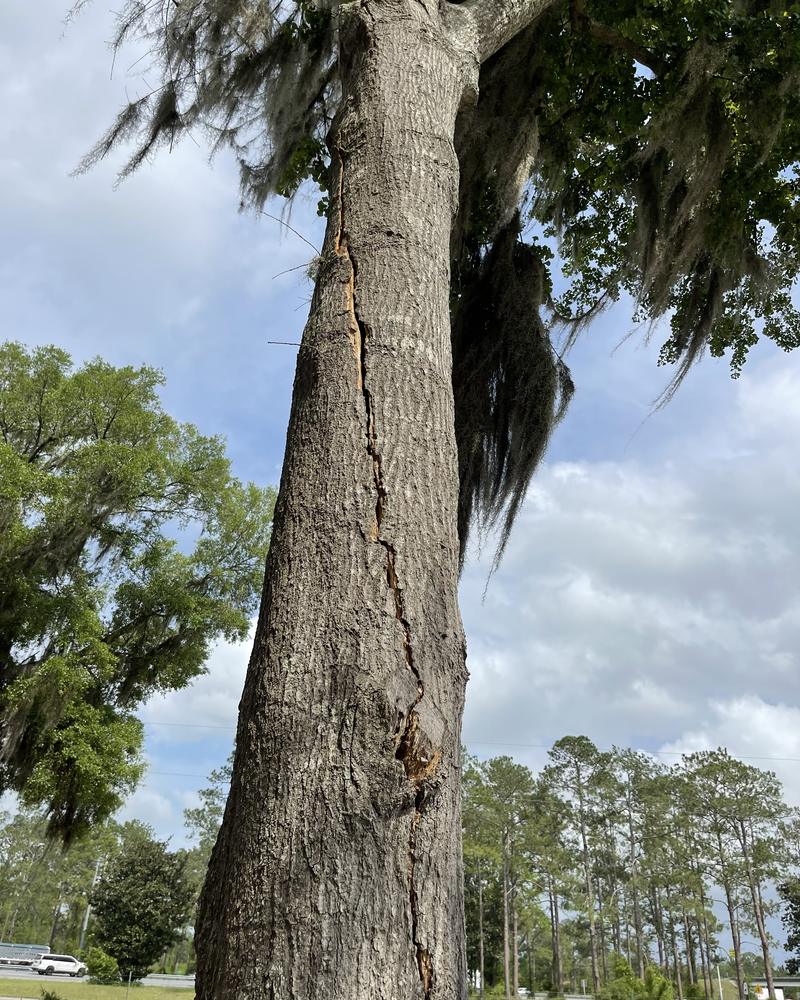
Trunk. Cracks, cavities, decay, fungal conks (shelf-shaped mushrooms that signal rot), lean, and codominant stems, two trunks of similar size splitting from one point. If bark is pinched into that joint, called included bark, the union is weaker.
Root collar, roots, and soil. The root collar is where the trunk flares into the roots. The assessor checks whether it’s buried, whether roots are cut, decayed, or girdling the trunk, whether the root plate has lifted, and whether the soil stays saturated.
Vines on the trunk or fill dirt over the root collar get noted as inspection limitations. A good assessment says what couldn’t be seen.
How Does an Assessor Rate the Risk?
Instead of a gut call, the risk is built from three ratings.
| Rating | Categories |
|---|---|
| Likelihood of failure | Improbable, possible, probable, imminent |
| Likelihood of impact | Very low, low, medium, high |
| Consequences | Negligible, minor, significant, severe |
Two matrices combine those into an overall rating of low, moderate, high, or extreme. Each rating applies to a set time frame, since a tree that’s fine for the next year may not be fine in five.
What Should the Written Assessment Include?
The ratings are only half of it. On the ISA form, the assessor also records:
- Mitigation options. Pruning out dead branches, reducing a heavy limb over the roof, or removal.
- Residual risk. The risk left after that work is done.
- Whether the data is final or preliminary, and whether an advanced assessment is recommended.
- When to reassess.
That paper trail is the point. Ours come back written, dated, and on file, so you have a record of what was checked and when.
Does Every Tree Visit Need a Formal Risk Assessment?
No. Our team can quote a straightforward trim or removal on site without one. A formal assessment makes sense when you’re deciding whether a big tree near the house stays or goes, when you want documentation on file, or when a tree shows several of the warning signs above.
If that sounds like your tree, ask about a tree risk assessment.
How Can You Check an Arborist’s Credentials?
Don’t take a logo on a truck at face value, ours included. ISA keeps a public credential directory where you can search by name and see which credentials a person holds, along with issue and expiration dates.
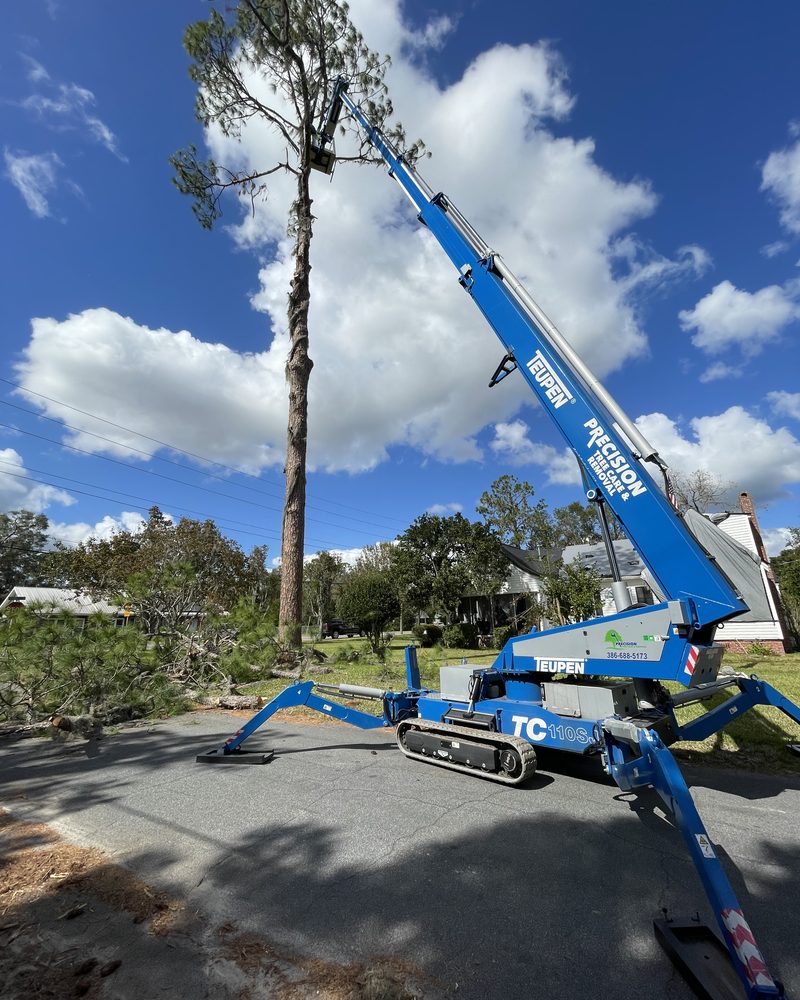
It takes a minute and separates a real credential from a claimed one. Our safety page covers the equipment side, from our fully remote-controlled grapple saw truck to our TC115 lift with 115 feet of reach.
Frequently Asked Questions
What does TRAQ stand for?
Tree Risk Assessment Qualification. It’s the ISA credential for arborists trained in a standardized tree risk assessment method.
What’s the difference between an ISA Certified Arborist and a Tree Risk Assessment Qualified arborist?
An ISA Certified Arborist has passed a broad exam on tree care. The tree risk assessment qualification is a separate credential focused only on rating tree risk, and it generally requires a credential like Certified Arborist first.
Does a tree risk assessment mean the tree has to come down?
No. Many assessments end with pruning, monitoring, or a reassessment date. Removal is one mitigation option among several, and the written assessment should explain why it was or wasn’t chosen.
How long is a tree risk assessment good for?
Each assessment has a stated time frame and a recommended reassessment date. Storms, construction, or new decay can change things sooner.
Want a Documented Answer About Your Tree?
Call (386) 688-5173 or reach our office and tell us what’s worrying you. We cover a 50-mile radius from Live Oak, including Lake City, Madison, Perry, and north Gainesville. If the tree is already dead, start with what’s urgent and what can wait.