Dead tree removal is urgent when the tree can reach something that matters: your house, the driveway, a play area, a power line. A dead tree that is cracked, leaning, or dropping limbs over those targets should come down now. One standing well away from anything people use can usually wait, with regular checks.
How Do You Know the Tree Is Actually Dead?
A stressed tree and a dead one can look alike in late summer. These are the signs that separate them:
- No leaves in the growing season while the same species nearby is green.
- Brown needles across the whole crown on a pine. UF/IFAS is direct on this: a pine with all brown needles is dead and should be removed.
- Bark falling off in sheets, or twigs that snap dry instead of bending.
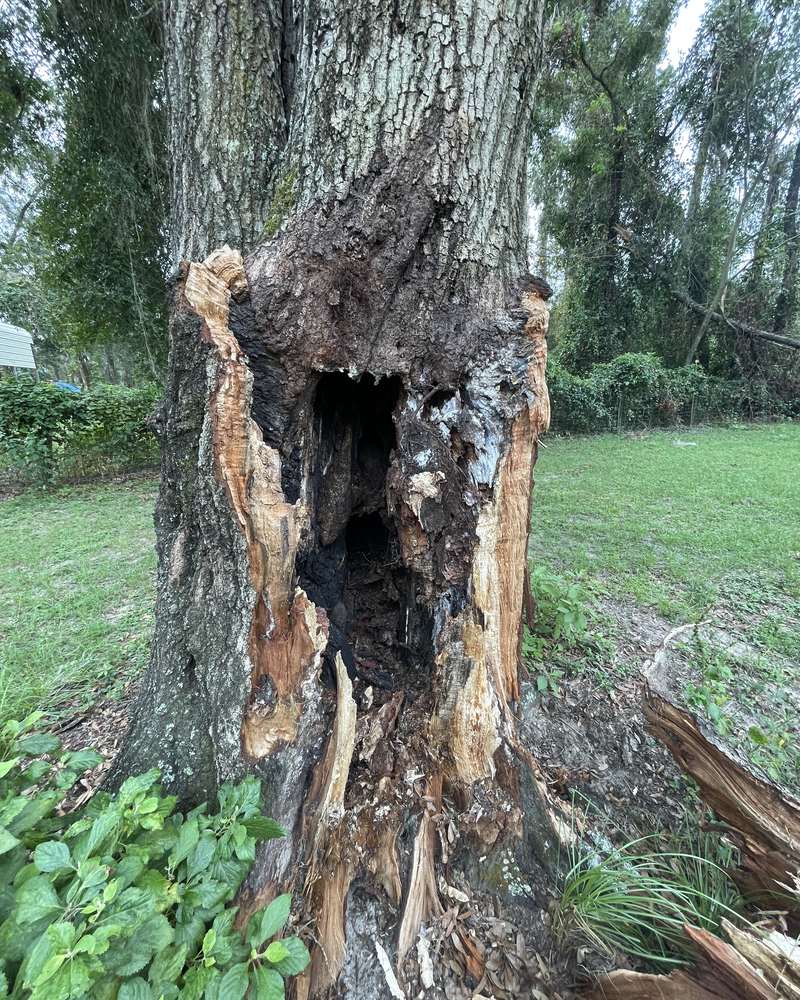
- Mushrooms or shelf fungus at the base, a sign of decay in the roots or lower trunk.
Pines are tricky. The same UF/IFAS page notes that storm-damaged pines can die slowly, over months. For a tree that’s declining but not dead, our post on how to tell when a tree needs to be removed walks through what decline typically looks like.
Which Dead Trees Need Removal Right Away?
Urgency comes from what’s underneath, not from how dead the tree looks.
UF/IFAS guidance on dead wood in yards says targets are the most important factor in tree risk. Arborists draw a circle around the tree with a radius up to 1.5 times its height, so a 60-foot tree’s danger zone can reach 90 feet out in every direction, because dead wood can shatter when it lands. Picture that circle around your tree. If any of these sit inside it, treat the tree as urgent:
- The house, a garage, or a shed
- The driveway or where cars park
- A play area, pool deck, or the path to the mailbox
- Power lines or the service drop to your house
Then look for anything that makes it worse. A crack in the trunk. A new lean. Broken limbs hung up in the crown. Soil heaving at the base.
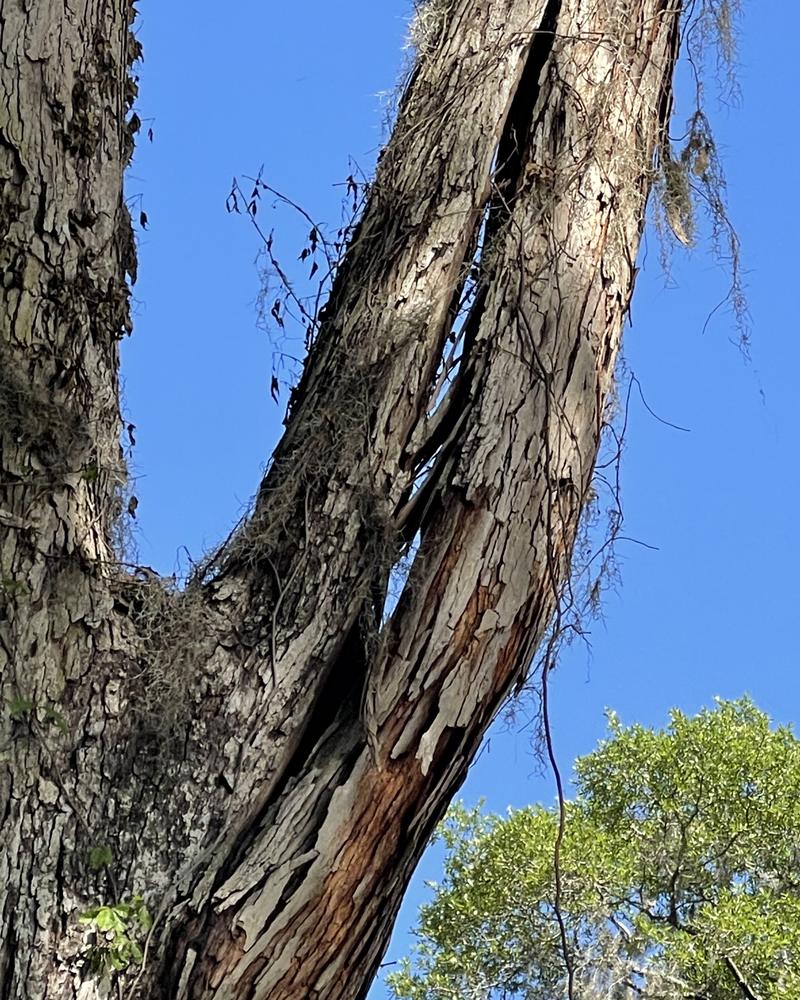
Any of those plus a target in range, and it goes to the top of the list. Keep people and vehicles out of that circle, leave the chainsaw in the shed, and have our tree removal crew look at it. Call (386) 688-5173. If a line is involved, call your utility first.
Which Dead Trees Should Come Down Soon?
This is the middle tier: dead, within reach of something, but with no cracks, no new lean, and no hanging limbs yet. Schedule it before the next stretch of storms, not after.
Two cases belong here even when the tree looks solid:
- A dead pine standing among live pines. Dying pines can draw bark beetles that move on to the healthy trees next door. We covered that in our pine bark beetle post.
- A dead tree next to a tree that is leaning. Our guide to a tree leaning towards your house walks through the lean itself.
Can a Dead Tree Ever Be Left Standing?
Yes. The same UF/IFAS publication says standing dead trees can stay in remote areas away from structures, vehicles, and foot traffic, where woodpeckers use them.
On acreage around Live Oak, Mayo, or Branford, a dead tree at the back of the property often can wait, with conditions:
- Nothing people use falls inside its strike circle
- You look it over after every major storm
- You revisit the call if you build, park, or clear land nearby
Who Decides Which Tier Your Tree Is In?
Our crew can quote the obvious calls on site. The harder ones are where a formal tree risk assessment helps: how likely the tree is to fail, what it would hit, and what the options are. Brazzi Smith is an ISA Certified Arborist who holds the Tree Risk Assessment Qualification, and he does our tree risk assessments. What you get back is written, dated, and on file.
Brazzi puts it this way: “A tree that fails on its own is bad luck. A tree that was visibly dead for two years is negligence.”
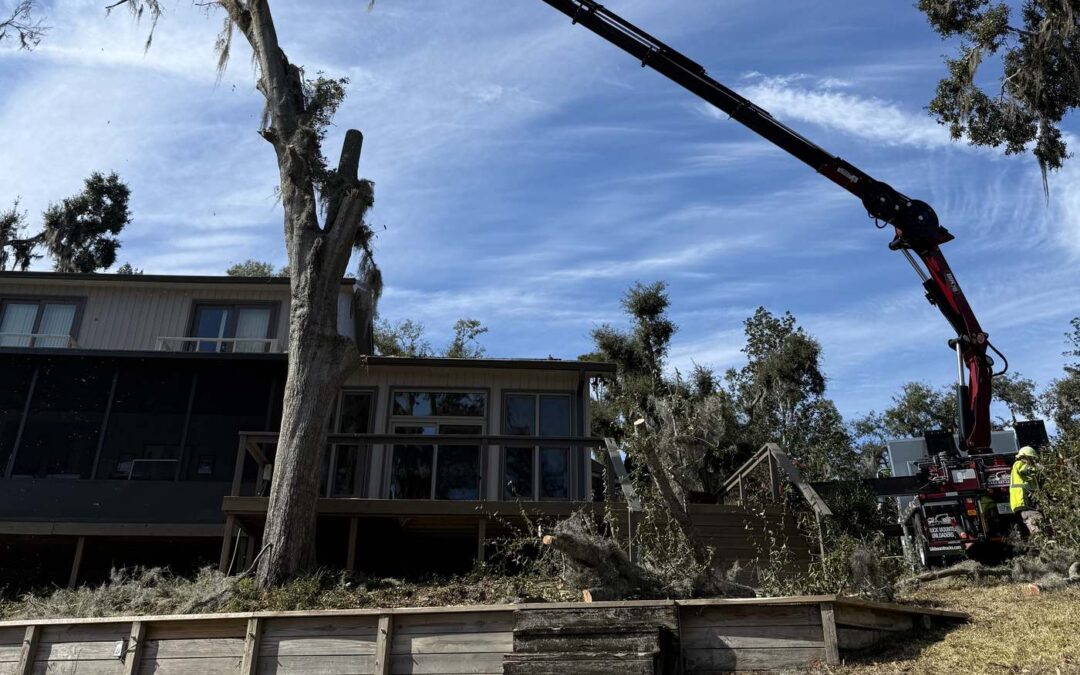
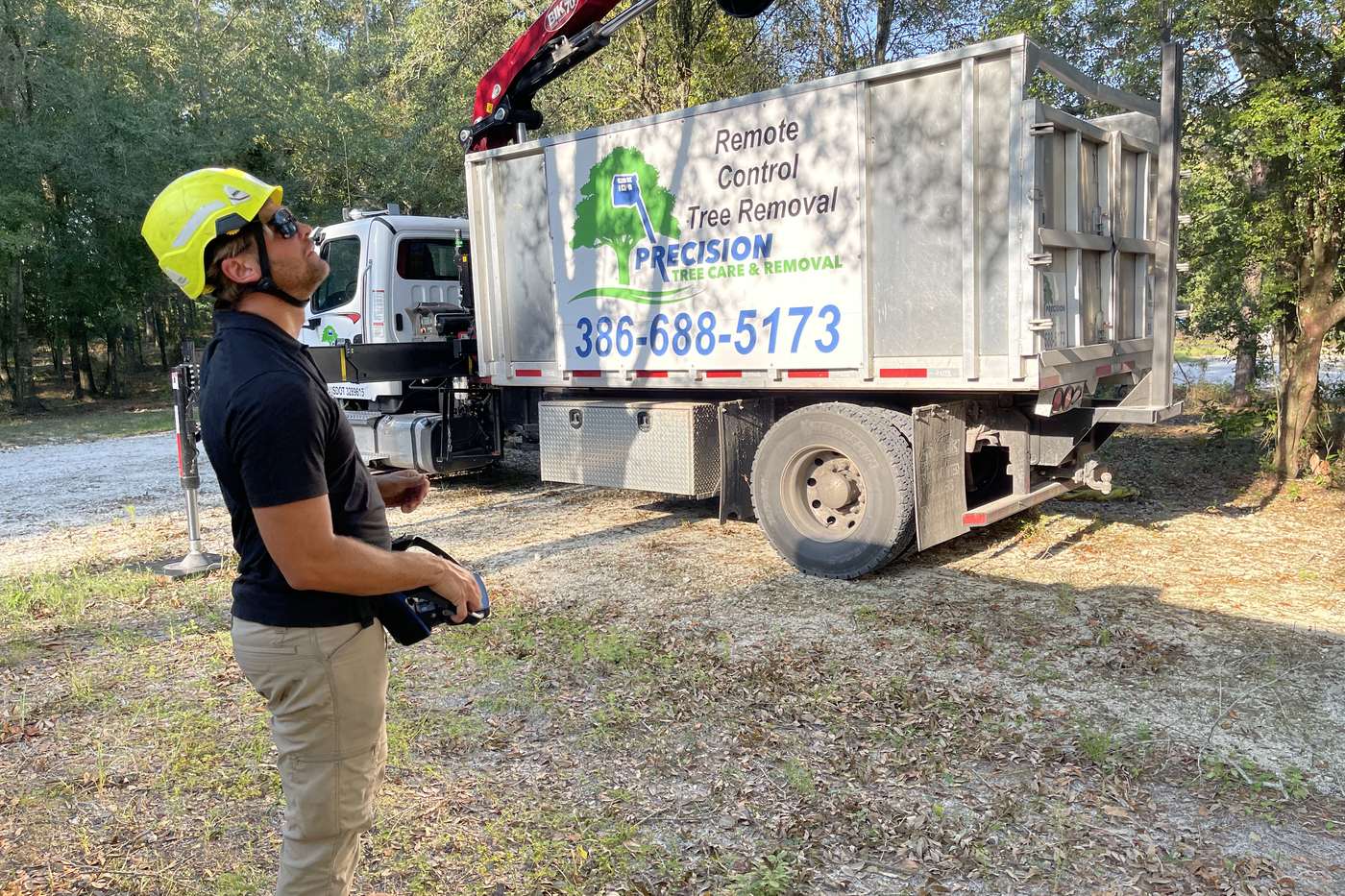
When a dead tree does come down near a house, we take it apart in controlled sections rather than dropping it. Our fully remote-controlled grapple saw truck cuts and lifts each piece clear of the roof, and our TC115 lift gives us 115 feet of reach for the tall ones. Our safety page covers how we protect the property around the tree. Stump grinding and haul-off can follow.
Frequently Asked Questions
Does a dead tree always need immediate removal?
No. It needs immediate removal when something it could hit sits within its strike zone, or when it shows cracks, a new lean, or hanging limbs. One far from structures, vehicles, and foot traffic can often stand if you check it after storms.
What happens if you don’t cut down a dead tree?
It keeps decaying. Limbs drop first, then the trunk or roots give way. The wood also gets less predictable to rig, so a controlled removal gets harder the longer it waits.
Is it easier to remove a dead tree?
Usually not. Dead wood can break in ways live wood won’t, so cuts and rigging take more planning. Near a house, that means sectional removal instead of one felling cut.
Who is responsible for removing a dead tree?
Usually the owner of the property where the tree stands. Shared property lines, HOAs, and utility lines can change that, so check first.
Does homeowners insurance cover dead tree removal?
It depends on your policy, so read yours or ask your agent. Policies often treat a tree that falls in a covered storm differently from a dead tree removed before it fails.
Not Sure Which Tier Your Tree Is In?
Send us a note or call (386) 688-5173 and we’ll look at the tree in person, not from a photo. We handle dead tree removal across a 50-mile radius from Live Oak, including Lake City, Madison, Perry, and north Gainesville. More answers are on our FAQ page.